

For many women, fertility tracking begins with one goal: identifying the fertile window.
Most apps, ovulation strips, and wearables are designed to identify the 5–6 most fertile days of the cycle. And while timing intercourse correctly is important, it is only one part of the fertility equation.
Clinically, one of the biggest missing pieces in modern fertility tracking is understanding ovulation quality and hormonal support during the implantation window.
Because ovulation is not simply a yes-or-no event.
You can ovulate and still struggle to conceive.
And this is where the conversation around fertility tracking needs to evolve.
The Overlooked Reality: Ovulation Is Only Step One
Ovulation means an egg was released.
But successful conception requires much more than that. It requires:
- A healthy follicle developing before ovulation
- Adequate estrogen rise pre-ovulation
- Strong progesterone production post-ovulation
- Sustained progesterone during implantation
- Stable endometrial lining development
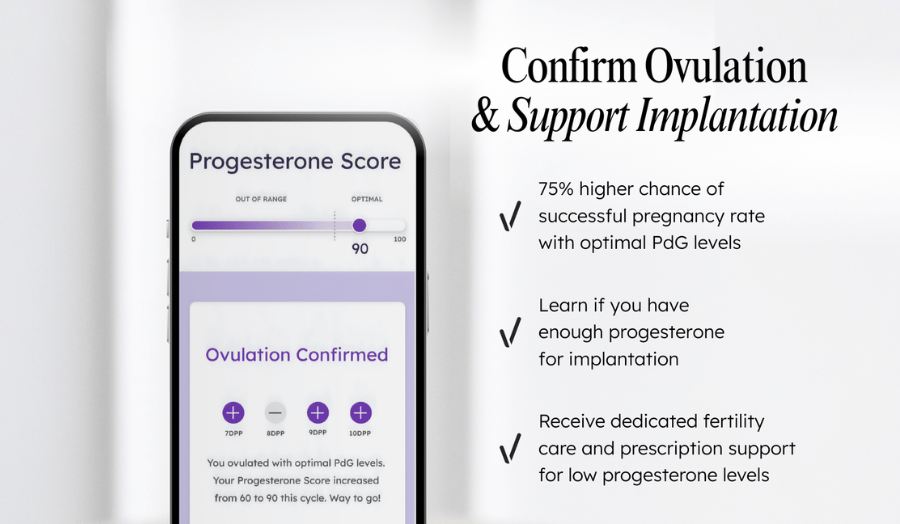
If progesterone production is low, short-lived, or inconsistent, implantation can fail — even when ovulation technically occurred.
This is why tracking ovulation alone can create a false sense of reassurance.
Why Ovulation Problems Are So Central to Fertility
Ovulation dysfunction is one of the leading contributors to infertility.
This can include:
- Irregular ovulation
- Weak ovulation
- Short luteal phase
- Low progesterone output
- Poor corpus luteum function
From a clinical perspective, the real question is not: Did you ovulate?
The real question is: How well did you ovulate, and did your body support implantation?
Why Progesterone and the Implantation Window Matter More Than Most People Realize
Progesterone is not just a post-ovulation hormone. It is the hormone that determines whether the body can successfully transition from ovulation into pregnancy.
After ovulation, the corpus luteum forms from the follicle that released the egg. Its job is to produce progesterone to:
- Stabilize the uterine lining
- Support embryo implantation
- Regulate immune tolerance
- Support early placental development
- Maintain early pregnancy until placental takeover
If progesterone does not rise high enough, or does not stay elevated long enough, implantation may not occur, or early loss may occur before pregnancy is even clinically detected.
Measuring progesterone metabolites during the implantation window (approximately 7–10 days post-ovulation) gives significantly more meaningful clinical insight than simply confirming ovulation occurred.
Why Ovulation Quality Can Change Month to Month
One of the most misunderstood realities of fertility physiology is that ovulation quality is not static.
Ovulation quality can shift based on:
- Stress levels
- Sleep quality
- Thyroid function
- Blood sugar stability
- Nutrient status
- Inflammation
- Gut health
- Environmental exposures
A woman can ovulate every month and still have inconsistent progesterone production from cycle to cycle.
This is why longitudinal hormone tracking provides far more insight than single lab snapshots.
Not All Fertility Tests Are Created Equal
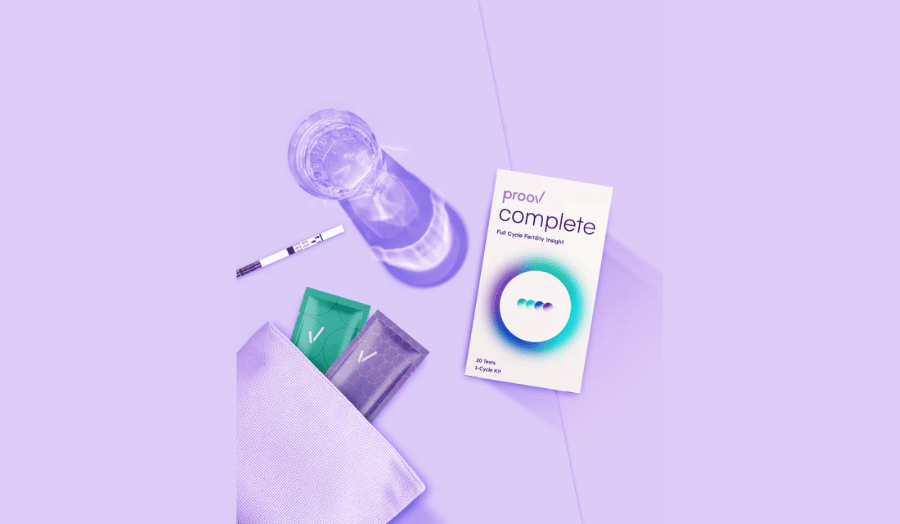
Many fertility trackers focus only on predicting ovulation through LH detection.
This tells you when ovulation is about to happen, but not:
- If progesterone rises enough afterward
- If progesterone stays elevated long enough
- If the implantation window is hormonally supported
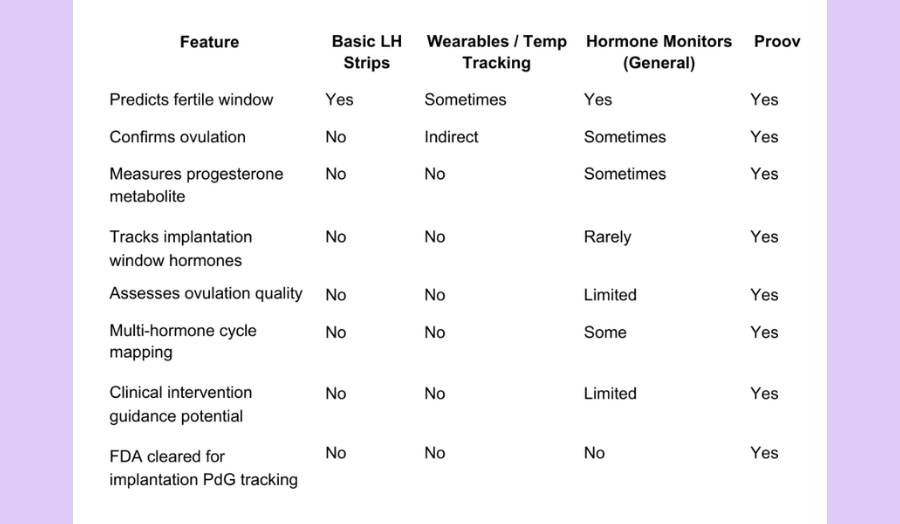
All PdG tests can technically confirm ovulation.
But only Proov is FDA cleared to measure PdG levels during the implantation window.
That distinction matters clinically.
Where Proov Changes the Game
Most fertility trackers stop at ovulation prediction.
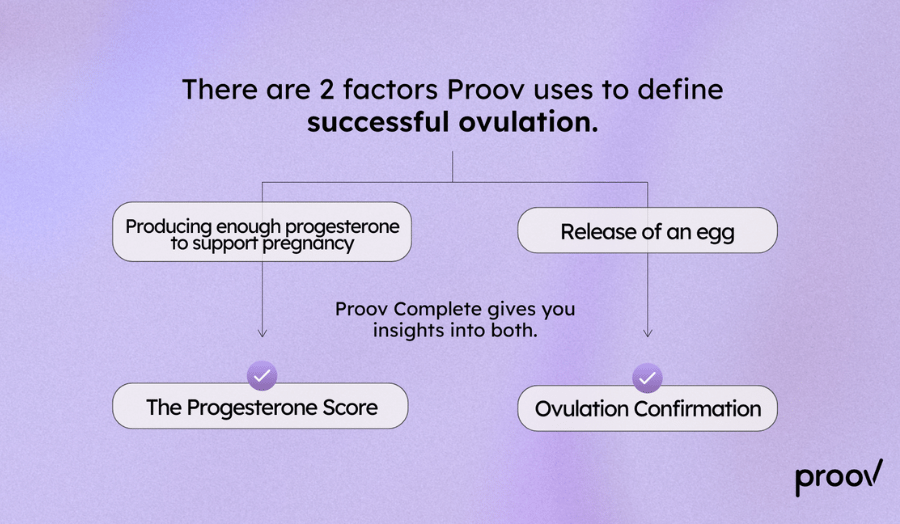
Proov goes further by helping women understand:
- Ovulation confirmation
- Ovulation quality
- Implantation hormone support
- Ovarian reserve patterns
- Hormone imbalance trends
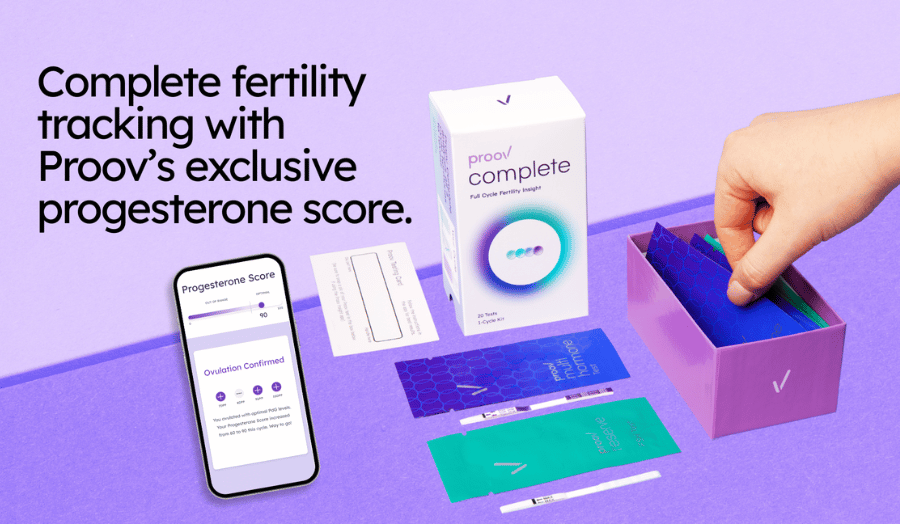
Proov tracks multiple hormones across the cycle including:
- FSH — ovarian reserve insight
- Estrogen metabolites — fertile window opening
- LH — ovulation trigger
- PdG — progesterone and implantation support
Proov is currently the only FDA-cleared test to track PdG during the implantation window, which is a major clinical differentiator.
Not All Fertility Tracking Tools Measure the Same Things
Case Example: When Ovulation Was Happening -But Conception Wasn’t
Patient Amy came in after trying to conceive for over a year.
Her history:
- Regular cycles
- Positive LH tests every month
- Normal basic hormone labs
- Previously told she was ovulating normally
But she was not conceiving.
When we evaluated progesterone metabolites during the implantation window, we found:
- Ovulation was occurring
- PdG rise was borderline
- PdG dropped early in the luteal phase
- Luteal phase length was shortening slightly
This suggested suboptimal ovulation quality and inconsistent luteal phase support.
Once we addressed root contributors including stress physiology, thyroid optimization, blood sugar balance, and targeted nutrient repletion, her PdG patterns stabilized.
She conceived within four cycles.
The Bigger Clinical Takeaway
Fertility is not just about releasing an egg.
It is about:
Releasing an egg
AND
Creating a hormonal environment that supports implantation
AND
Sustaining early pregnancy signals
When we only track ovulation, we are only seeing the beginning of the story.
The Bottom Line
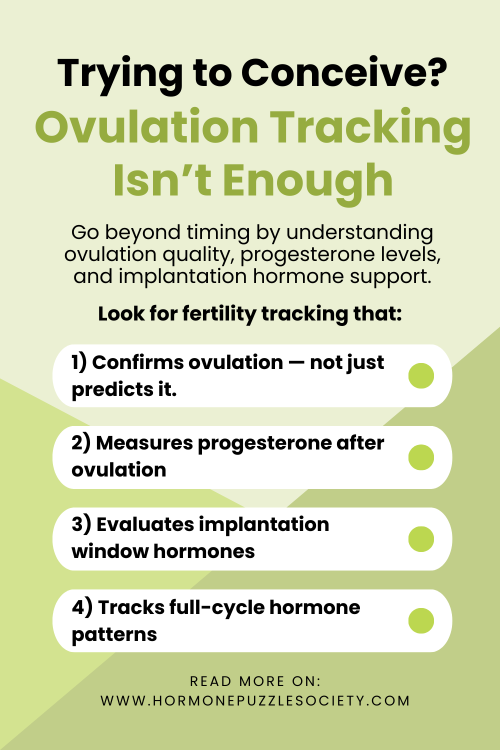
Fertility tracking should not stop at predicting ovulation.
It should help you understand:
- If ovulation happened
- How strong ovulation was
- Whether progesterone supported implantation
- What your cycle is telling you about overall hormone health
Because conception is not just about timing.
It is about readiness.
And high-quality ovulation is one of the most important predictors of successful conception.
Written by:

Dr. Kela Smith, PhD, DNM
Fertility and Hormone Expert
The Hormone Puzzle Society™
www.hormonepuzzlesociety.com
This blog post contains affiliate links to brands I trust and recommend to my patients
These statements have not been evaluated by the Food and Drug Administration. This product is not intended to diagnose, treat, cure, or prevent any disease.
To learn more or to purchase Proov, visit – https://proovtest.com/PUZZLE.
To learn more about my services or to book a telehealth appointment visit www.hormonepuzzlesociety.com.
Research Supporting Progesterone’s Role in Implantation
Macklon NS, Geraedts JPM, Fauser BCJM.
Conception to ongoing pregnancy: the ‘black box’ of early pregnancy loss.
Human Reproduction Update. 2002;8(4):333–343.
Csapo AI, Pulkkinen MO.
Indispensability of the human corpus luteum in the maintenance of early pregnancy.
Obstetrics & Gynecology. 1978;52(2):135-140.
Ghosh D, Sengupta J.
Endocrinology of blastocyst implantation.
Molecular and Cellular Endocrinology. 2014;386(1-2):34-41.
Paulson RJ.
Hormonal induction of endometrial receptivity.
Fertility and Sterility. 2011;96(3):530-535.
Bourgain C, Devroey P.
The endometrium in stimulated cycles for IVF.
Human Reproduction Update. 2003;9(6):515-522.