


If you are trying to conceive and feel both hopeful and uneasy about what comes next, you are not alone. Many people carry excitement about pregnancy while also holding quiet fears about labor, medical decisions, or whether their voice will be respected.
For some, birth fear and anxiety shows up long before pregnancy begins. It can come from stories shared by others, dramatic portrayals of birth, or past experiences that felt disempowering. Sometimes the fear is not even about birth itself, but about losing control or being rushed through decisions without understanding them.
These feelings are not a sign that you are unprepared. They are often a sign that you care deeply and want to feel safe, informed, and supported as you move through the TTC journey.

Why birth fear and anxiety is so common
Birth fear and anxiety is often learned, not inherent. Many people grow up without seeing calm, supported birth experiences. Instead, they are exposed to:
Television and movies that portray birth as chaotic or dangerous
Social media stories that highlight extremes without context
Well-meaning friends or family members sharing difficult experiences
When stories are shared without explaining the medical context, provider choices, or available alternatives, they can unintentionally create the belief that birth is something that happens to you rather than something you participate in.
Over time, these narratives can shape expectations, especially for those already navigating the emotional complexity of trying to conceive.
How birth fear and anxiety can show up during the TTC journey
This is not about blaming anxiety for fertility challenges. TTC is multifaceted and deeply individual. However, ongoing stress and fear can affect how safe and regulated the body feels.
Common experiences include:
Persistent worry about pregnancy or medical care
Difficulty relaxing or trusting your body
Feeling overwhelmed by information or decisions
Avoiding planning because it feels emotionally heavy
Rather than viewing fear as something to eliminate, it can be more helpful to see it as information. Often, fear is signaling a need for clarity, education, or support.
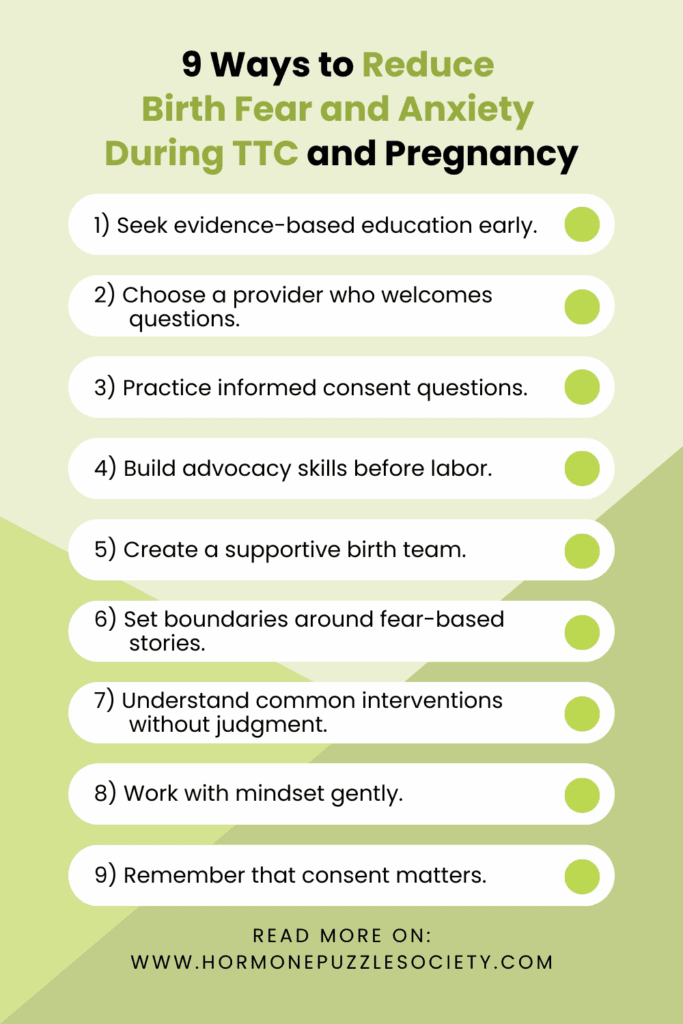
9 powerful ways to reduce birth fear and anxiety
1. Seek evidence-based education early
Learning how pregnancy and birth work, including common interventions and options, can replace fear of the unknown with understanding. Education is most helpful when it presents balanced information rather than one rigid philosophy.
2. Choose a provider who welcomes questions
A supportive provider does not rush concerns or dismiss curiosity. Feeling heard during routine visits often sets the tone for how supported someone feels later.
3. Practice informed consent questions
Simple questions can shift conversations from pressure to collaboration:
What is being recommended and why
Why is it suggested now
What happens if we wait or decline
Are there alternatives
4. Build advocacy skills before labor
Advocacy is easier when practiced ahead of time. Short, clear statements are often enough, and you do not always need to explain or justify your choices.
5. Create a supportive birth team
Partners or support people benefit from learning alongside you. When others understand your preferences, they can help protect your space if you are tired or focused.
6. Set boundaries around fear-based stories
It is appropriate to limit exposure to stories that increase anxiety. Protecting your mental space during TTC and pregnancy is a form of self-care.
7. Understand common interventions without judgment
Fear often grows when interventions are poorly explained. For example, Pitocin in labor has specific medical uses, including induction, labor augmentation, and postpartum bleeding prevention. Understanding when and why it is used helps reduce unnecessary fear.
8. Work with mindset gently
Mindset is not about forcing positivity. It is about noticing internal narratives and offering yourself more supportive ones. Calm reassurance is often more effective than pressure.
9. Remember that consent matters
In many non-emergent situations, you have the right to pause, ask questions, or decline. Knowing this ahead of time can be grounding.
Understanding postpartum intrusive thoughts with compassion
Many new parents experience intrusive thoughts after birth. These thoughts are unwanted and can feel alarming, especially when no one talks about them openly. In many cases, they reflect the brain’s heightened awareness and protective instincts rather than harmful intent.
If intrusive thoughts feel overwhelming, persistent, or distressing, support from a qualified healthcare or mental health professional is important. Compassionate care can make a meaningful difference.
What to look for in a provider who supports calm decision-making
A supportive provider relationship often includes:
Respectful answers to questions
Clear explanations of recommendations
Willingness to discuss alternatives
Recognition of you as the decision-maker
If interactions consistently leave you feeling dismissed or pressured, it may be worth exploring other options. Emotional safety is part of quality care.
A gentle reminder for anyone carrying fear into this season
If birth fear and anxiety is present while you are trying to conceive, it does not mean you are behind or doing something wrong. Fear often appears when something matters deeply and feels uncertain.
Confidence usually builds gradually through education, respectful conversations, and experiences of being heard. You do not need all the answers now. You are allowed to learn at your own pace, revisit decisions, and adjust as clarity grows.
For many people, simply realizing they have more agency than they were taught is deeply reassuring. Wherever you are in this process, moving slowly and intentionally is not a weakness. It is a way of creating safety.
This article is based on a longer, in-depth conversation from The Hormone Puzzle Podcast titled
From Fear to Empowerment: Calming Pregnancy Anxiety and Preparing for Birth with Confidence with Trish Ware.
If you prefer to learn through listening, the episode expands on the themes in this article, including education, advocacy, boundaries, and reducing fear around pregnancy and birth.